Now Reading: The Silent Predator: India’s BrahMos Seals Jakarta’s Defense Frontier
-
01
The Silent Predator: India’s BrahMos Seals Jakarta’s Defense Frontier

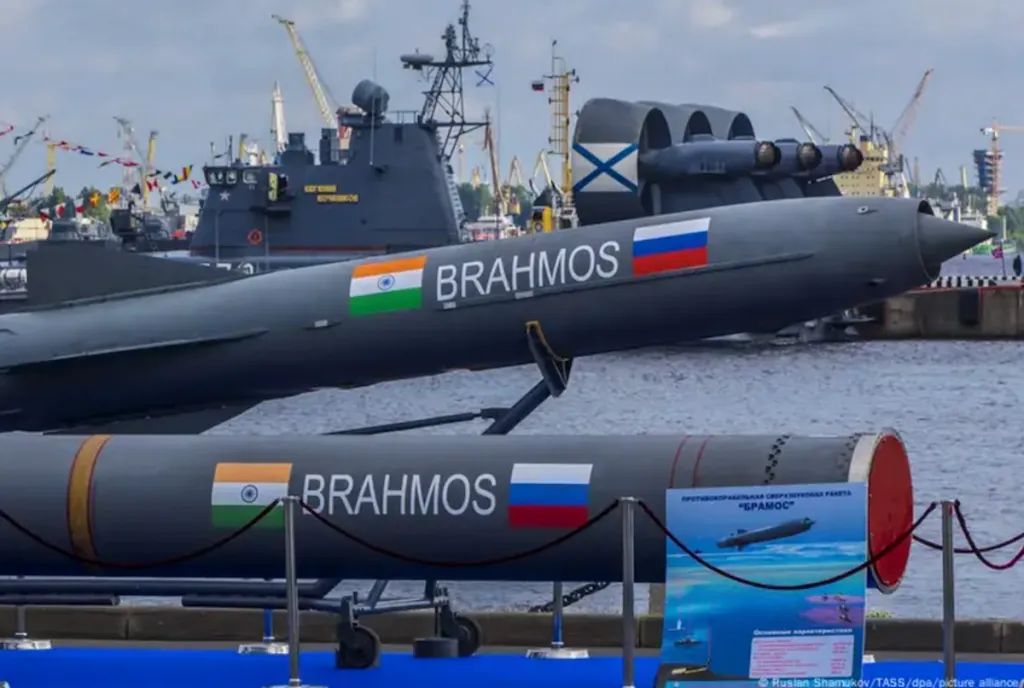
In a move that significantly recalibrates the power balance of the Indo-Pacific, Indonesia has officially signed a landmark agreement to procure India’s BrahMos supersonic cruise missile system. Confirmed by Jakarta’s defense ministry on March 9, 2026, the deal—estimated between $200 million and $450 million—makes Indonesia the second Southeast Asian nation, after the Philippines, to integrate this lethal “fire-and-forget” weapon into its arsenal. This acquisition is not merely a military upgrade; it is a strategic message aimed directly at the contested horizons of the South China Sea.
The strategic logic for Jakarta is clear. As China continues its assertive “grey zone” tactics in the Natuna Sea, Indonesia has sought a credible deterrent that can hold large surface combatants at risk. The BrahMos, traveling at Mach 3 (three times the speed of sound), is virtually impossible to intercept with current ship-borne defense systems. Its low-altitude, sea-skimming trajectory allows it to evade radar until the final seconds of impact. By deploying these batteries along its vast archipelagic coastline, Indonesia effectively creates a “no-go zone” for any fleet challenging its sovereign waters.
For New Delhi, this deal represents a crowning achievement for the “Make in India” initiative and the Act East Policy. Coming on the heels of Operation Sindoor in May 2025—where the BrahMos demonstrated surgical precision against terror infrastructure—international confidence in Indian defense technology has reached an all-time high. India is no longer just a regional security partner; it is becoming a primary provider of high-end deterrence, pulling itself deeper into the security mix of Southeast Asia. As Vietnam also moves toward a similar agreement, the proliferation of the BrahMos is creating a “latticework” of defense that complicates Beijing’s maritime ambitions at every turn.