Now Reading: Skyroot’s Vikram-1 Triumph and the Steep Climb Ahead: From Historic Launch to Sustainable Business Success
-
01
Skyroot’s Vikram-1 Triumph and the Steep Climb Ahead: From Historic Launch to Sustainable Business Success
Skyroot’s Vikram-1 Triumph and the Steep Climb Ahead: From Historic Launch to Sustainable Business Success

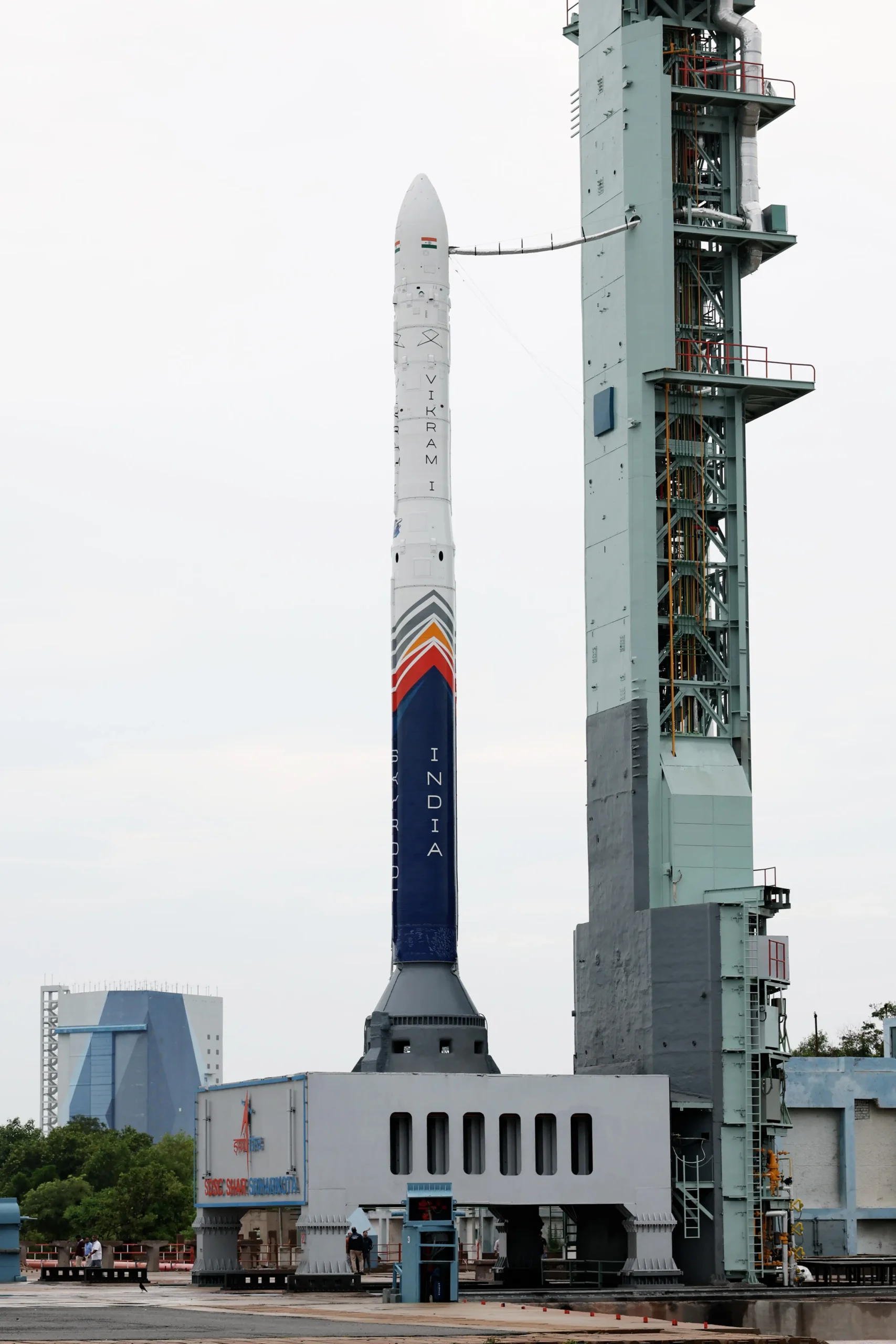
Skyroot Aerospace’s Vikram-1 became the first privately developed Indian rocket to reach orbit on July 18, 2026, making Skyroot the first private Indian company to achieve orbital spaceflight from Indian soil and establishing India as the third country after the United States and China with private orbital launch capability. Yet this monumental technical achievement masks the formidable business challenges that now confront the Hyderabad-based aerospace startup as it transitions from demonstrated capability to sustainable commercial operations.
The successful completion of Mission Aagaman represents a watershed moment for India’s space sector liberalization, validating that domestic startups possess engineering talent and innovation capacity to compete globally. Vikram-1 reached a 450-kilometre orbit approximately 15 minutes after liftoff, carrying multiple payloads including satellites and symbolic cargo. The achievement carries profound symbolic weight, inspiring a generation of Indian entrepreneurs and engineers while demonstrating that space technology need not remain monopolized by government agencies.
Skyroot raised approximately $60 million in May 2026 in a round co-led by Sherpalo Ventures and GIC, taking its valuation above $1.1 billion and making it India’s first space-technology unicorn. This financial backing reflects investor confidence in the company’s technical vision and growth potential, providing substantial capital for scaling manufacturing, testing, and operational infrastructure.
However, capital alone cannot guarantee business success in an increasingly competitive global launch market. While Vikram-1’s success provides credibility, long-term success will depend on converting technical achievements into steady business growth, with private companies judged not only by rocket-building capability but also by their capacity to attract customers, secure recurring contracts, and operate at competitive costs.
The transition from proof-of-concept to commercial reliability presents multifaceted challenges. Customers will scrutinize not merely one successful launch but demonstrated repeatability—the company’s ability to conduct subsequent launches flawlessly while maintaining rapid turnaround times and cost competitiveness. Capital can buy factories, test hardware and inventory, but it cannot compress reliability into a single successful ascent. Skyroot’s next flights will determine whether Vikram-1 represents singular achievement or beginning of consistent operational capability.
Building resilient supply chains constitutes another critical imperative. While ISRO provided motor casting and test facilities, liquid-engine testing, trajectory analysis, safety support, vehicle integration and launchpad access, Skyroot must develop indigenous manufacturing capabilities enabling independent operations. Global competition intensifies as established players like SpaceX continue reducing launch costs through reusable technologies, forcing Skyroot to simultaneously achieve operational excellence while maintaining competitive pricing.
International market access remains uncertain. While India’s space sector liberalization created domestic opportunities, global customers may prefer established providers with longer operational histories. Skyroot must demonstrate international credibility through multiple successful missions before capturing meaningful market share in the competitive commercial launch sector.
Long-term success depends on developing strong international partnerships, building supply chain resilience, maintaining high manufacturing standards, expanding launch capacity, and exploring complementary services including satellite deployment solutions, mission planning, and space logistics.
Despite these challenges, Skyroot’s achievement remains profoundly significant. The company has demonstrated that Indian entrepreneurs can navigate India’s reformed space regulatory environment, secure international investment, and execute complex space missions successfully. Founded in 2018, Skyroot emerged among a new generation of Indian space startups that have attracted global investor backing following the sector’s liberalization.
As Skyroot advances toward additional test flights planned later in 2026 and eventual commercial operations, the company stands at a pivotal juncture where historical accomplishment must translate into business sustainability, proving that Indian space entrepreneurship can sustain long-term commercial viability alongside technical innovation.