Now Reading: Ink and Evolution: Virat Kohli’s New Full-Sleeve Narrative Ahead of IPL 2026
-
01
Ink and Evolution: Virat Kohli’s New Full-Sleeve Narrative Ahead of IPL 2026
Ink and Evolution: Virat Kohli’s New Full-Sleeve Narrative Ahead of IPL 2026

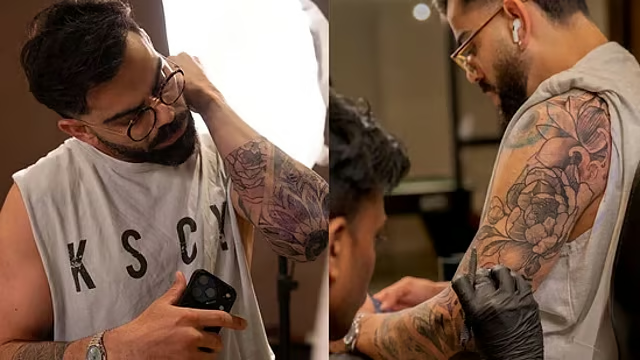
As the floodlights at the M. Chinnaswamy Stadium prepare to illuminate the opening clash of IPL 2026, all eyes are once again on Virat Kohli. However, this season, the fascination extends beyond his record-breaking willow to the intricate artwork adorning his left arm. Just days before Royal Challengers Bengaluru begins its historic title defense against Sunrisers Hyderabad, Kohli has unveiled a masterful new full-sleeve tattoo—a project that is less about aesthetic flair and more about a profound, living autobiography in ink.
Created over 24 grueling hours by the team at Aliens Tattoo India, the design is a sophisticated fusion of restoration and new creation. Rather than starting with a blank canvas, artists Sunny Bhanushali, Allan Gois, and Devendra Palav worked to refine and integrate Kohli’s existing ink, such as his Shiva-inspired armband, into a cohesive masterwork. The centerpiece of this evolution is an intricate mandala crafted through meticulous dotwork, acting as a spiritual anchor that flows into semi-realistic motifs of the lotus and peony. The lotus, in particular, serves as a poignant metaphor for Kohli’s journey; rising from muddy waters to bloom with purity, it mirrors his resilience in a career defined by both intense scrutiny and unparalleled triumph.
What makes this latest addition truly remarkable is its intentional lack of finality. The studio has revealed that the sleeve is designed to remain “incomplete,” serving as a chronological record that will evolve alongside Kohli’s life milestones. As he stands on the precipice of becoming the first player to cross the 9,000-run mark in IPL history, the tattoo reflects a man who has embraced the destruction of ego in favor of mindfulness. For Kohli, entering the 2026 season as a champion for the first time has clearly signaled a period of reflection. This sleeve is a testament to the idea that greatness is not a destination but a continuous transformation, proving that even as he reaches the twilight of a legendary career, his story is still being written—one run and one needle-stroke at a time.