Now Reading: Hong Kong Inferno: Deadly Blaze Exposes High-Rise Vulnerabilities
-
01
Hong Kong Inferno: Deadly Blaze Exposes High-Rise Vulnerabilities

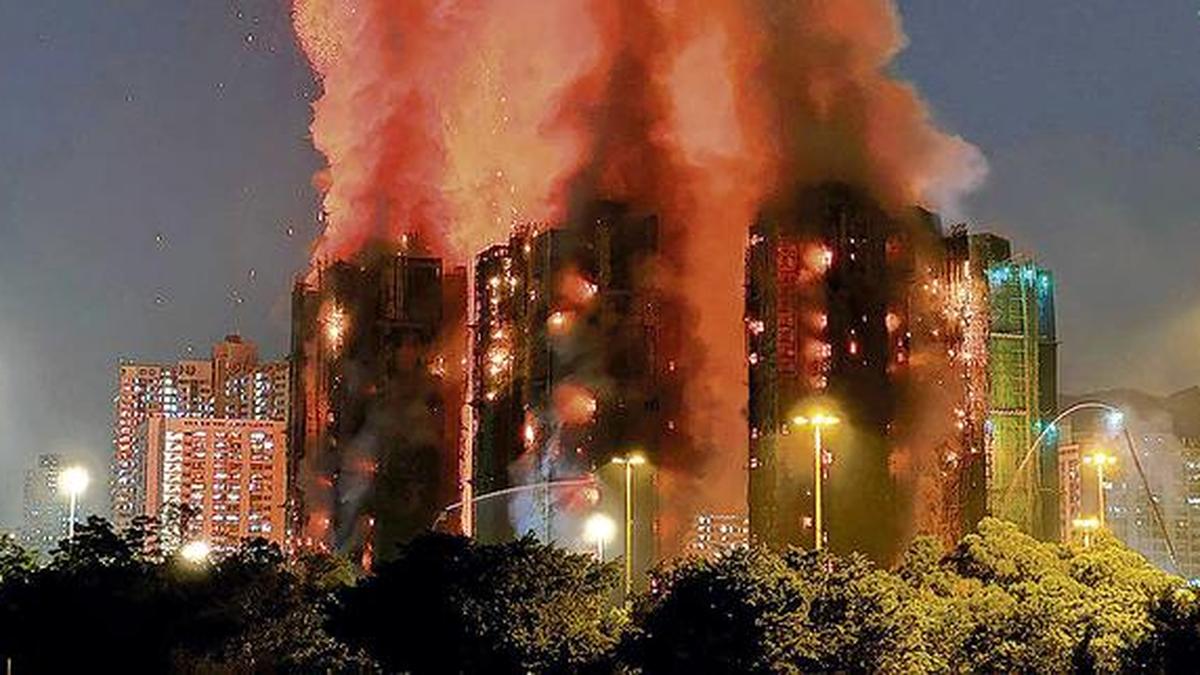
Hong Kong is reeling from an unprecedented residential disaster after a massive high-rise fire in the Tai Po district claimed at least 55 lives, with hundreds more still unaccounted for as of Thursday morning. The inferno, which tore through the Wang Fuk Court housing complex, is now the city’s deadliest in decades, exposing critical safety flaws in building maintenance practices. Videos capturing the tragedy show terrifying scenes of fierce flames leaping and spreading with alarming speed across multiple 32-story towers, an intensity exacerbated by the structures being sheathed in bamboo scaffolding and construction netting .
The blaze, which began on Wednesday afternoon, rapidly escalated to a Level 5 alarm—the highest severity—as firefighters struggled to reach residents trapped on upper floors amid extreme heat and thick smoke. Compounding the tragedy, authorities suspect the use of highly flammable materials, including polystyrene foam cladding and non-compliant netting employed during extensive, ongoing renovations, fueled the fire’s uncontrollable spread. The reliance on bamboo scaffolding, a traditional but combustible material the government had planned to phase out, is now under intense scrutiny as a key factor in the disaster.
In response, police have arrested three executives from the construction firm responsible on suspicion of manslaughter, alleging gross negligence that allowed the fire to become an unmitigated catastrophe. Hong Kong’s Chief Executive John Lee has ordered immediate, city-wide safety inspections of all public housing estates undergoing major works. The incident serves as a grim and potent reminder of the inherent risks in the region’s dense, high-rise environment, demanding a fundamental overhaul of building safety and construction oversight to prevent future loss of life.