Now Reading: Digital Dawn: PM Modi Unveils India’s First Fully Digital Airport in Navi Mumbai
-
01
Digital Dawn: PM Modi Unveils India’s First Fully Digital Airport in Navi Mumbai
Digital Dawn: PM Modi Unveils India’s First Fully Digital Airport in Navi Mumbai

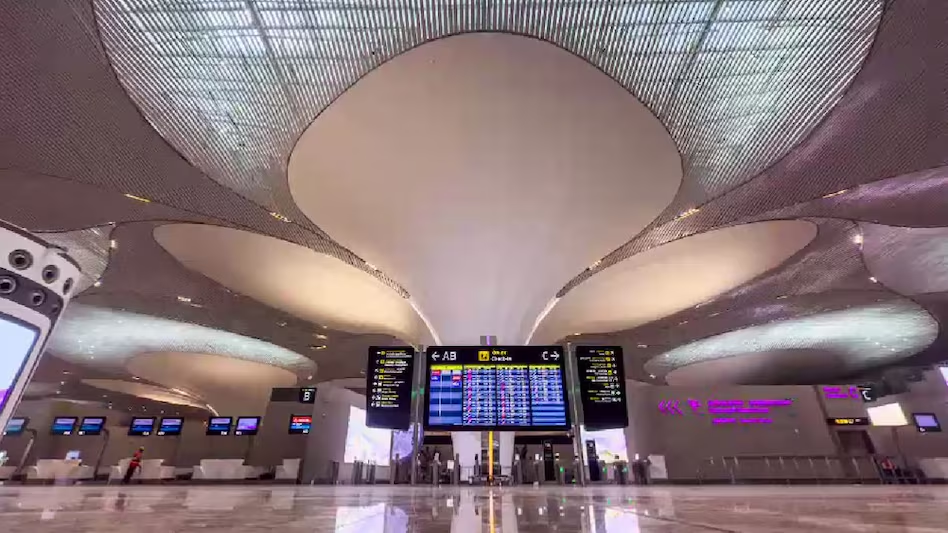
Prime Minister Narendra Modi has inaugurated the highly anticipated Navi Mumbai International Airport (NMIA) today, marking a major leap in India’s aviation landscape. This sprawling 1,160-hectare greenfield project, developed under a Public-Private Partnership at a Phase 1 cost of around $2.35 billion, is set to transform the Mumbai Metropolitan Region into a global multi-airport city, joining the ranks of metropolises like London and New York.
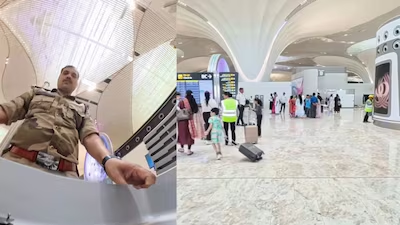
Dubbed India’s first fully digital airport, NMIA promises an “anxiety-free” travel experience through cutting-edge technology. Passengers can look forward to a seamless journey powered by the Digi Yatra platform, offering contactless entry, security clearance, and boarding. The terminal, which boasts a stunning lotus-inspired architecture, is equipped with AI-enabled automated systems for pre-booked parking and online baggage drop. Furthermore, the cargo facility is completely automated with digital tracking and climate-controlled zones for high-value goods.
Beyond its digital core, the airport prioritizes sustainability. It features a planned 47 MW solar power generation capacity, EV bus services, dedicated storage for Sustainable Aviation Fuel (SAF), and will be the first airport in India to be connected by a water taxi service. Phase 1 will handle 20 million passengers annually, a capacity that will eventually scale up to 90 million, significantly easing congestion at the existing Chhatrapati Shivaji Maharaj International Airport. With commercial operations slated to begin in December, NMIA is positioned not only as an aviation hub but also as a massive economic catalyst, projected to create over two lakh jobs across the region.