Now Reading: Nepal Redesigns Re 1 Coin, Removes Disputed Territorial Map in Diplomatic Shift—Retains Kalapani Map on Rs 2 Coin
-
01
Nepal Redesigns Re 1 Coin, Removes Disputed Territorial Map in Diplomatic Shift—Retains Kalapani Map on Rs 2 Coin
Nepal Redesigns Re 1 Coin, Removes Disputed Territorial Map in Diplomatic Shift—Retains Kalapani Map on Rs 2 Coin

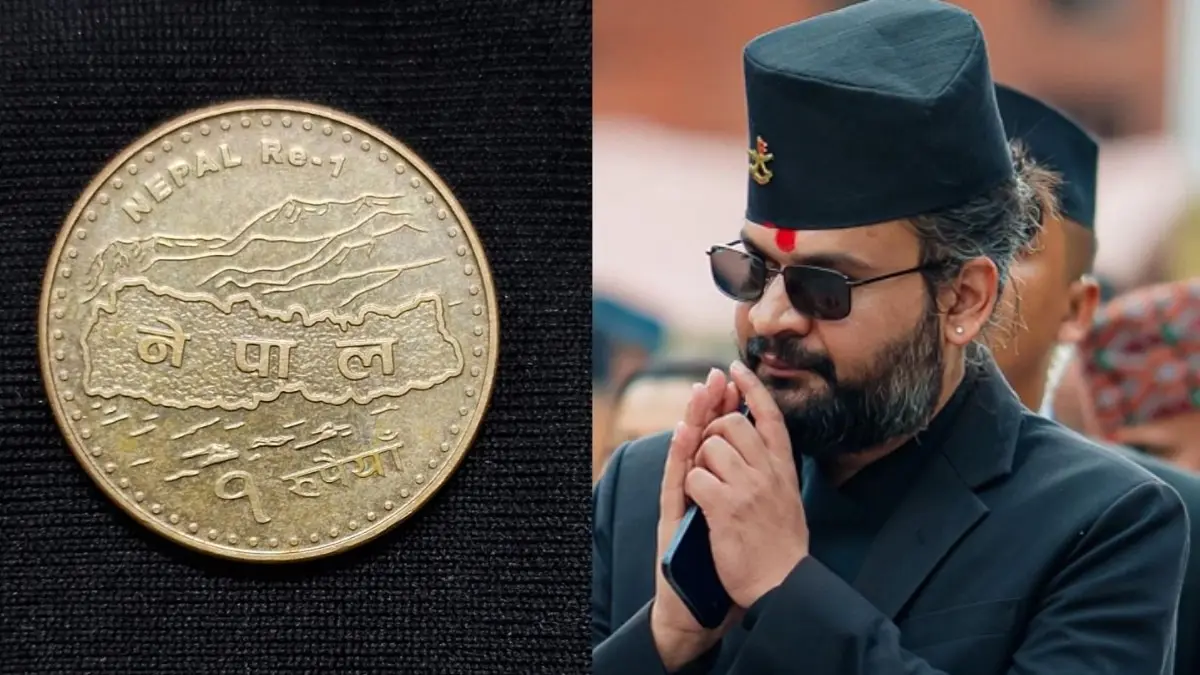
The Nepal government has approved the minting of newly designed one-rupee and two-rupee coins, removing the country’s controversial political map from the one-rupee coin while retaining it on the two-rupee coin. The Council of Ministers approved the proposal following a recommendation by the Nepal Rastra Bank (NRB), marking a significant diplomatic reversal from Nepal’s assertive territorial positioning established in 2020.
The earlier design of the one-rupee coin featured Nepal’s political map that included Limpiyadhura, Lipulekh and Kalapani, territories claimed by Nepal but regarded by India as part of its own territory. The redesigned one-rupee coin will instead carry the image of the Lo Ghyakar Monastery in Marang village of Mustang, one of Nepal’s oldest monasteries. This shift represents tangible departure from the nationalist stance adopted by former Prime Minister KP Sharma Oli, whose 2020 constitutional amendment incorporated these disputed areas into Nepal’s official territorial claims.
The decision reflects complex geopolitical calculations navigating Nepal’s relationship with India while managing domestic political sensitivities. While the disputed map has been removed from the one-rupee coin, the two-rupee coin will continue to feature it, suggesting the government seeks middle ground between accommodating Indian concerns and maintaining face domestically regarding territorial claims.
The move has triggered fierce domestic criticism. Senior Nepali Communist Party leader Bhim Rawal condemned the move as a compromise on the nation’s sovereignty, stating: “If the government led by Prime Minister Balen Shah has indeed decided to remove the map of Nepal, including Limpiyadhura, Lipulekh and Kalapani, from the one-rupee coin and replace it with the image of the Lo Ghyakar Monastery, it will constitute another serious anti-national decision and a blow to Nepal’s territorial integrity.” Opposition voices demand clarification regarding whether the government is retreating from territorial claims previously enshrined in constitutional amendments and parliamentary resolutions.
Historical context illuminates the significance of this reversal. Nepal’s then KP Oli-led government had incorporated these areas into the country’s official map in May 2020, sparking diplomatic tensions as India responded sharply, characterizing the claims as “untenable” and an “artificial enlargement” of territorial assertions lacking historical or legal foundation.
The dispute involves three geographically and strategically significant areas. Kalapani remains contested territory historically claimed by Nepal despite Indian administrative control through Uttarakhand’s Pithoragarh district. Lipulekh constitutes a strategic pass providing access to China, while Limpiyadhura involves boundary interpretation disagreements regarding the Kali River’s source.
India has maintained consistently that Limpiyadhura, Lipulekh, and Kalapani constitute integral parts of Indian territory, rejecting Nepal’s 2020 constitutional claims and subsequent assertions across currency notes, textbooks, and monetary instruments. India’s stance remains rooted in treaties, administrative precedent, and geographical interpretation fundamentally incompatible with Nepal’s revisionist territorial claims.
The selective removal of contested maps—from one-rupee coins while retaining them on two-rupee coins—reveals political pragmatism attempting to navigate contradictory imperatives. Premier Balen Shah’s government appears seeking normalized relations with India while avoiding domestic political fallout from appearing to surrender long-standing territorial positions.
As Nepal mints the redesigned one-rupee coins, the decision symbolizes broader geopolitical recalibration reflecting evolving prioritization of bilateral cooperation and economic stability over confrontational territorial brinkmanship, though domestic opposition suggests this diplomatic repositioning remains contentious within Nepal’s fractious political landscape.