Now Reading: Reign of Fear: Kapil Sharma’s Surrey Cafe Hit by Third Shooting
-
01
Reign of Fear: Kapil Sharma’s Surrey Cafe Hit by Third Shooting

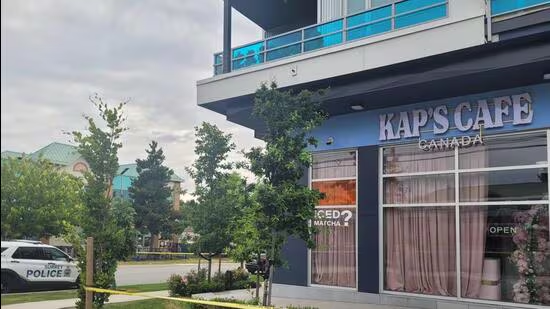
In a disturbing escalation of violence targeting businesses in British Columbia, Kap’s Cafe, the Surrey eatery owned by comedian Kapil Sharma, has been attacked by gunfire for the third time in four months. The latest incident occurred early Thursday morning, with Surrey Police Service (SPS) responding to reports of multiple shots fired at the establishment on 85 Avenue and 120 Street. Fortunately, despite staff being inside the premises at the time, no injuries were reported, though the facade was heavily damaged.
This repeated targeting—following similar drive-by shootings in July and August—has raised serious alarms about the growing problem of extortion-related violence and organized crime in the region, particularly within the South Asian community. Police have stated the attack bears the “earmarks of extortion,” with a social media post, purportedly from associates of the Lawrence Bishnoi gang, swiftly claiming responsibility. The unverified post not only threatened Mr. Sharma but also referenced broader issues with the Bollywood community, drawing international attention to the nexus between transnational crime and celebrity figures.
The persistence of these attacks, even after the café had undergone extensive repairs and enhanced security, signals a brazen challenge to law enforcement. The incident highlights the urgent need for a decisive crackdown by the SPS and the Provincial Extortion Task Force. As the investigation into the motive and perpetrators continues, the chilling series of events casts a pall of fear over local businesses and the entire community in Surrey.