Now Reading: The Hyper-Reality Effect: Why DeepVeer’s Daughter’s Photo Sparked an AI Conspiracy
-
01
The Hyper-Reality Effect: Why DeepVeer’s Daughter’s Photo Sparked an AI Conspiracy
The Hyper-Reality Effect: Why DeepVeer’s Daughter’s Photo Sparked an AI Conspiracy

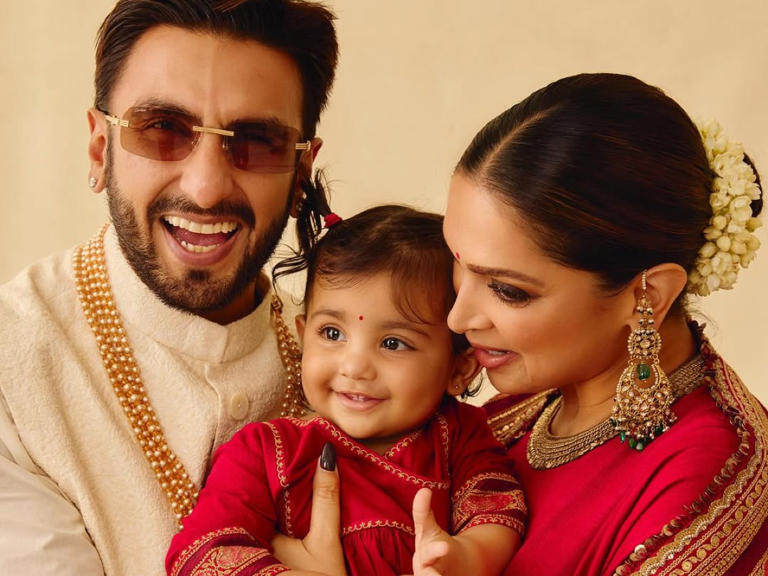
When Bollywood’s power couple, Deepika Padukone and Ranveer Singh, finally shared the first full-face photograph of their daughter, Dua, on Diwali, the moment was supposed to be one of universal adoration. Instead, it triggered a bizarre digital conspiracy, with a significant number of fans questioning if the picture was real or, in fact, an AI-generated creation. The core issue wasn’t the picture itself, but its unsettling perfection.
The viral family portrait—a meticulously styled moment featuring Deepika and Dua twinning in crimson-red ensembles, complemented by Ranveer’s ivory sherwani—was flawless. Every detail, from the symmetry of the composition to the immaculate lighting and the baby’s perfectly angelic features, was too polished. This level of photographic flawlessness immediately collided with the public’s recent conditioning by hyper-realistic AI imagery. Millions of fan-made, algorithmically generated images of “Bollywood babies” have circulated in the past year, training audiences to associate such pristine, airbrushed beauty with artificial fabrication.
Experts suggest this is a prime example of the “hyper-reality effect,” where professionally executed real-world visuals appear so ideal they start to resemble a simulation. In an era saturated with sophisticated deepfakes and generative tools, online skepticism has become the default. Despite the photo being a genuine, albeit highly-edited, professional family portrait shared from the couple’s official accounts, its cinematic quality became its curse. Fans zoomed in, not to admire, but to search for the tell-tale visual artifacts that distinguish reality from a machine’s perfect rendering. The real irony is that in their quest for authenticity, many viewers mistook flawlessness for fraud.